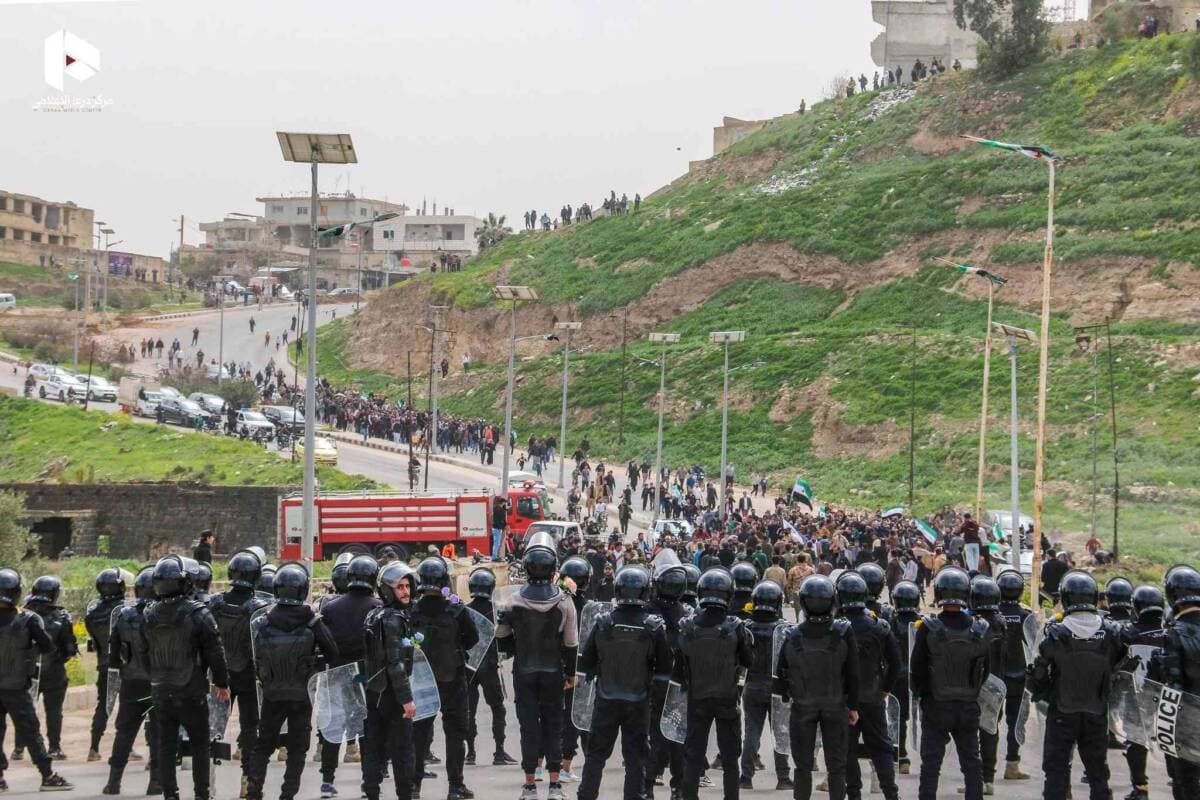
Two Years After Assad’s Fall, Syrians Say Key Revolution Goals Remain Unfinished
Fifteen years after the 2011 uprising that began in Daraa, Syrians marked the March 18 anniversary for the second year running in a country transformed by the fall of the Assad regime on Dece...
Fifteen years after the 2011 uprising that began in Daraa, Syrians marked the March 18 anniversary for the second year running in a country transformed by the fall of the Assad regime on December 8, 2024. While the regime’s collapse was historic, the period since liberation has been marred by waves of post-fall violence—including deadly reprisals on the coast that killed over 1,400 people and deadly clashes in Suwayda—and by fits and starts in integrating armed and regional actors such as the SDF. These events, together with continuing insecurity, reconstruction needs and contested local governance, leave Syrians uncertain whether the revolution’s original demands for freedom, justice, dignity and the rule of law have been met.
Voices and key gaps
Interviews with civil society leaders, rights activists and officials highlight mixed progress and persistent gaps. Fadel Abdul Ghany of SNHR says rigorous documentation has improved accountability prospects but that “actual accountability” remains distant: as of August 2025 SNHR documented at least 177,057 enforced disappearances and warns that selective settlements risk entrenching impunity. Journalists’ groups report greater openness and mobility but say legal protections, safety guarantees and reliable access to information are still lacking. Families of the missing welcome new institutions—the National Commission for Missing Persons and a multi-directorate transitional justice commission—but stress that forensic capacity, funding and time are needed to locate graves, identify victims and pursue reparations. Kurdish representatives praise Presidential Decree No. 13 as a positive step but warn that constitutional recognition, broader dialogue with Kurdish actors beyond the SDF, and safeguards against partisan monopolization are essential to avoid renewed marginalization.
Governance, services and outlook
Local governance and basic services remain weak: municipal funding shortfalls, appointments based on patronage rather than competence, frozen legislation and limited transparency hinder reconstruction and delivery of water, electricity and roads. Experts urge rapid laws on parties and political organization, practical measures to address the cost-of-living crisis and credible plans for dignified return of displaced Syrians. Across the interviews the consensus is cautious: significant institutional foundations have been laid and some freedoms have expanded, but durable justice, inclusive political frameworks and effective service delivery are still works in progress rather than fulfilled promises, leaving the revolution’s core aims uncompleted, as reported by Syria Direct