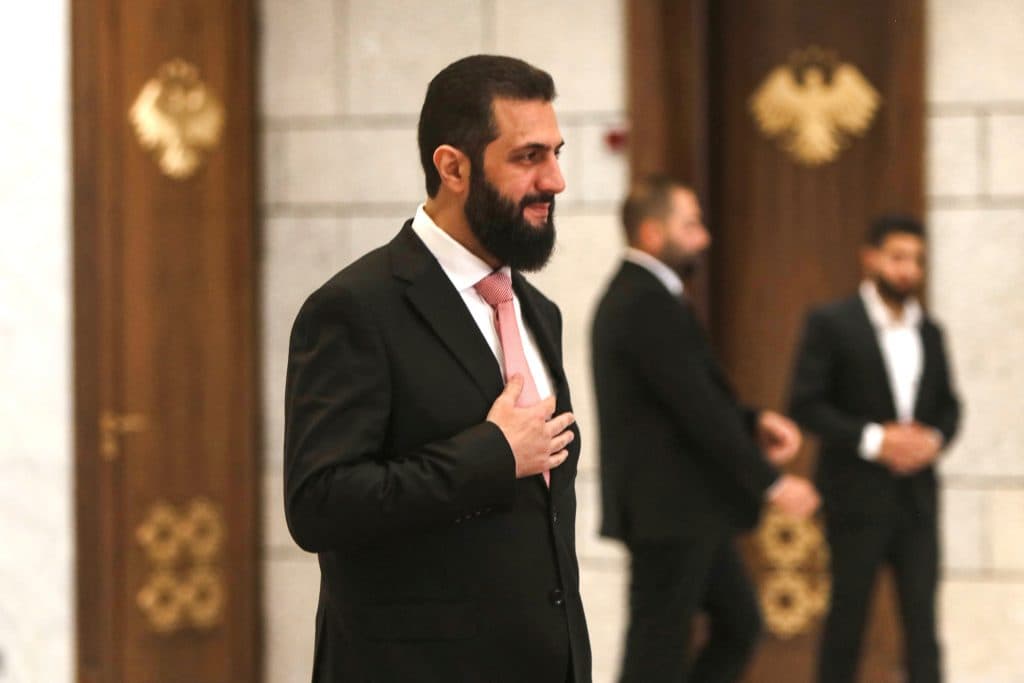
Syria Pursues State-Centered Ties with Lebanon, Rejects Military Intervention
Syrian President Ahmad al-Sharaa outlined a policy toward Lebanon that stresses support for Lebanese sovereignty, deeper economic ties and a refusal to deploy Syrian forces across the border....
Syrian President Ahmad al-Sharaa outlined a policy toward Lebanon that stresses support for Lebanese sovereignty, deeper economic ties and a refusal to deploy Syrian forces across the border. In an Al Jazeera interview he warned that Lebanon’s collapse would have direct consequences for Syria and said Damascus is coordinating with Beirut on political, security and economic measures. Sharaa reiterated that the state must monopolize law, weapons and decisions of war and peace, criticized Hezbollah’s independent armament and recalled the group’s intervention in Syria’s war—while saying Damascus will not send troops into Lebanon and remains open to political contacts when they serve stability.
Economic and diplomatic push
Alongside diplomacy—including recent Syrian ministerial visits to Beirut—Damascus is promoting regional economic integration as a stability tool, backing projects such as rehabilitating the Kirkuk–Baniyas oil route and exploring links that could connect Iraq, Syria and Lebanon to Mediterranean outlets like Tripoli. Officials present this strategy as a way to create shared economic stakes in security, even as they acknowledge major hurdles: infrastructure needs, financing, armed groups outside state control and ongoing Israeli operations. Sharaa framed Syria’s approach around three pillars—avoiding direct military entanglement, restoring state authority over weapons, and building interconnected trade and energy links—while also seeking a security arrangement with Israel that preserves Syria’s Golan claims, as reported by The Syrian Observer