Report: Syria shifts from Captagon production to transit hub as smugglers adopt balloons
Key developments A new ETANA Center report says the fall of Bashar al-Assad’s regime in December 2024 has transformed Syria from a major Captagon producer into a regional transit corridor. Industrial...
Key developments
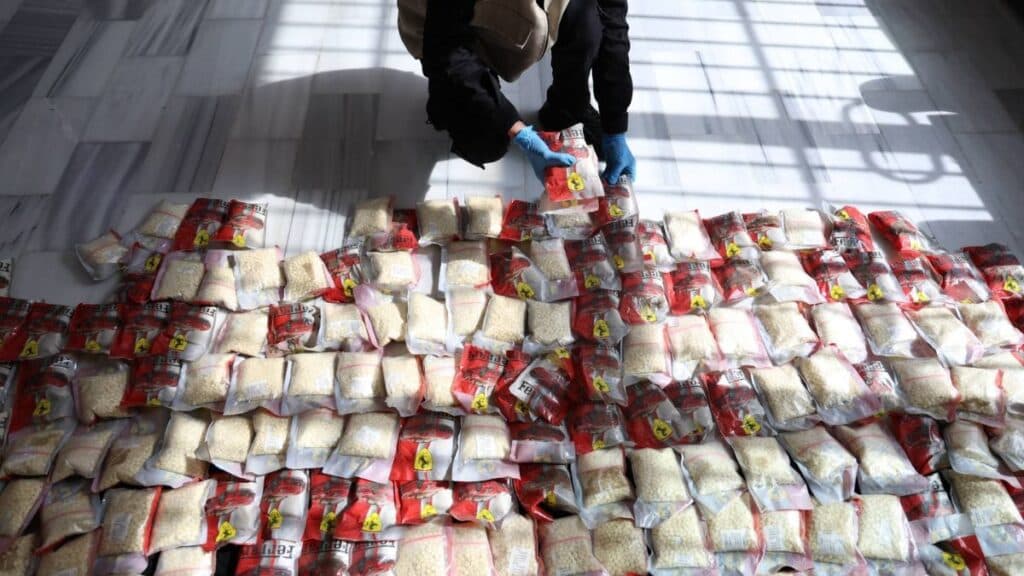
A new ETANA Center report says the fall of Bashar al-Assad’s regime in December 2024 has transformed Syria from a major Captagon producer into a regional transit corridor. Industrial-scale manufacture contracted after production facilities linked to the regime were dismantled, and most Captagon now enters Syria as a finished product—largely via Lebanon—while methamphetamine shipments increasingly come from Iraq. Overall smuggling attempts fell by about 40%, with monthly crossings dropping from 88 in February 2024 to 29 in February 2025, but the success rate rose sharply from roughly 25% under Assad to 57% after his fall. Smugglers have shifted from human couriers and drones to cheaper, higher-capacity airborne balloon systems, which have become the dominant method for cross-border transfers.
The report also documents a major geographic shift: during Assad’s final 15 months more than 80% of attempts originated in Suwayda, but after the regime’s collapse roughly 80% now start in the Syrian Badia, exploiting a security vacuum and low population density. ETANA criticizes interim authorities for not prioritizing anti-smuggling efforts and warns that corruption and weak border forces have enabled freer movement for traffickers. In response to cross-border threats, Jordan launched "Operation Jordanian Deterrence" on May 2–3, carrying out precision airstrikes on sites in Suwayda it said were used by arms and drug networks and destroying factories, workshops and warehouses tied to trafficking. as reported by Enab Baladi