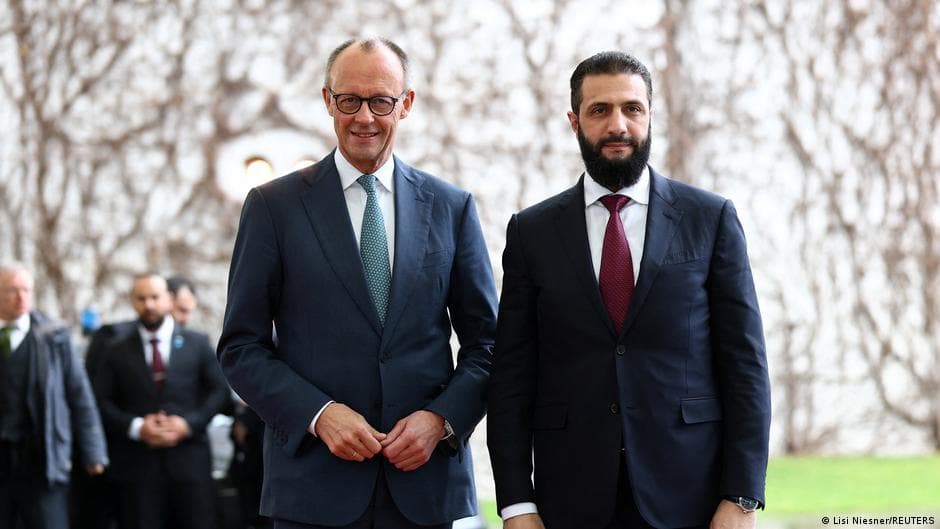
Merz's 80% repatriation target for Syrians ignites political fallout
Berlin diplomatic row over proposed Syrian returns Chancellor Friedrich Merz told reporters that "80%" of Syrians in Germany should return within three years, a figure he said reflected Syrian interi...
Berlin diplomatic row over proposed Syrian returns
Chancellor Friedrich Merz told reporters that "80%" of Syrians in Germany should return within three years, a figure he said reflected Syrian interim President Ahmed al-Sharaa's wish. Al-Sharaa later denied making that demand, turning the remark into a potential diplomatic incident and prompting rapid reactions across Germany. Members of Merz's coalition and opposition politicians criticized the move: some called it unrealistic or cynical, while government figures defended the objective as aligning with migration policy. Commentators warned that naming a concrete percentage and timetable risked raising expectations the government could not meet.
The proposal clashes with legal and practical realities. Germany hosts roughly 1.2 million people of Syrian origin (more than 900,000 counted as refugees), over a quarter of whom hold German citizenship; many have subsidiary protection or have integrated into the workforce, including large numbers of doctors and nurses. Deportations to Syria resumed in 2025 after the ouster of Bashar al-Assad, but case reviews, legal appeals and a backlog of some 180,000 asylum matters make mass removals difficult. Experts say returning such a high share in three years is unfeasible—calculations suggest thousands would need to leave daily—and few Syrians have opted into voluntary return incentives so far (3,678 accepted offers in 2025). The row is likely to have domestic political consequences ahead of the next election, as reported by Deutsche Welle