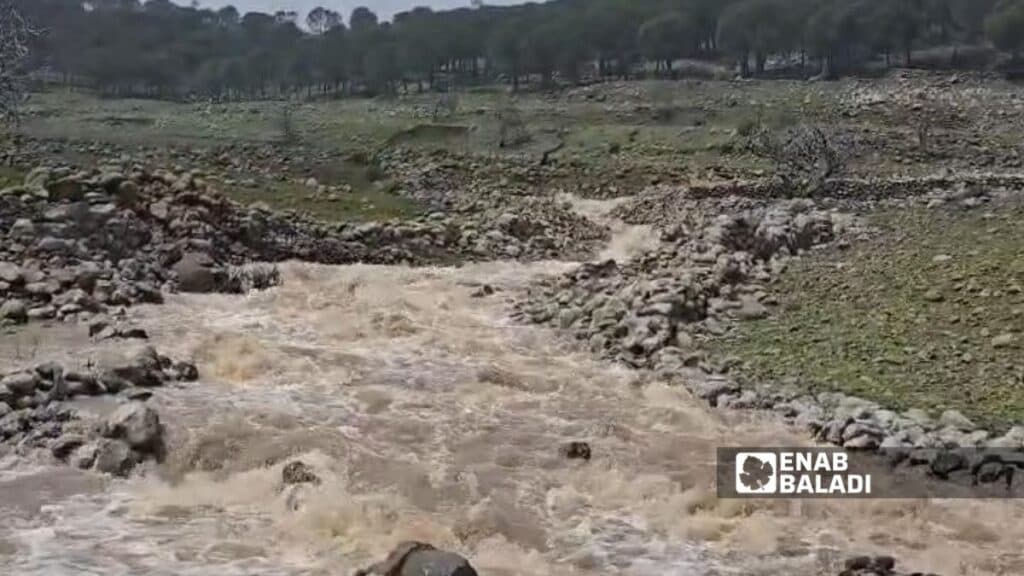
Heavy rains collapse Israeli embankments, spark flash floods in Quneitra
Heavy rainfall on March 30 caused earthen embankments built along the barbed-wire fence to fail, sending flash floods through the western seasonal stream of Jubata al-Khashab and along the mi...
Heavy rainfall on March 30 caused earthen embankments built along the barbed-wire fence to fail, sending flash floods through the western seasonal stream of Jubata al-Khashab and along the military road dubbed “Sufa 53.” Floodwaters inundated agricultural land and several homes around the villages of Ofania, Ain al-Bayda, and Jubata al-Khashab in northern Quneitra countryside, damaging fields planted with wheat, fava beans and barley. Videos circulating on social media showed water channeling along the road where embankments could no longer retain flows; although the flooding did not cover wide areas, farmers warned of crop loss ahead of harvest and increased soil erosion.
The embankments and trenches were placed by Israeli forces during construction of the Sufa 53 military road, a project begun in mid-2022 that extends from the occupied Golan Heights into Syrian territory by tens to hundreds of meters in places. Local correspondents and residents have reported bulldozers and tanks clearing land, restricting farmers’ access and using gunfire to keep civilians away during operations. Activists and locals say the road and its poorly planned infrastructure have environmental and agricultural consequences that are now heightened by recent unstable weather and heavy rains across Syria. as reported by Enab Baladi